
Short answer: there is no single median price for Sacramento, because the number changes every month and depends on the source, the area, and the type of home. We left a specific figure out on purpose, because a number copied into an article goes stale fast. The better move is to look up the latest sold-price median for your own city and house type from a source with a date on it. This guide shows you where to look and how to use what you find.
What median price actually means
The median is the middle number. If you line up every home sold in a month from cheapest to most expensive, the median is the one in the middle. It is better than an average for housing because a few very expensive sales do not pull it up the way they pull up an average.
It is still just one number. It does not tell you what your house will sell for, because it blends large homes, small homes, new builds, and houses that need work into a single figure.
Why one Sacramento number is not enough
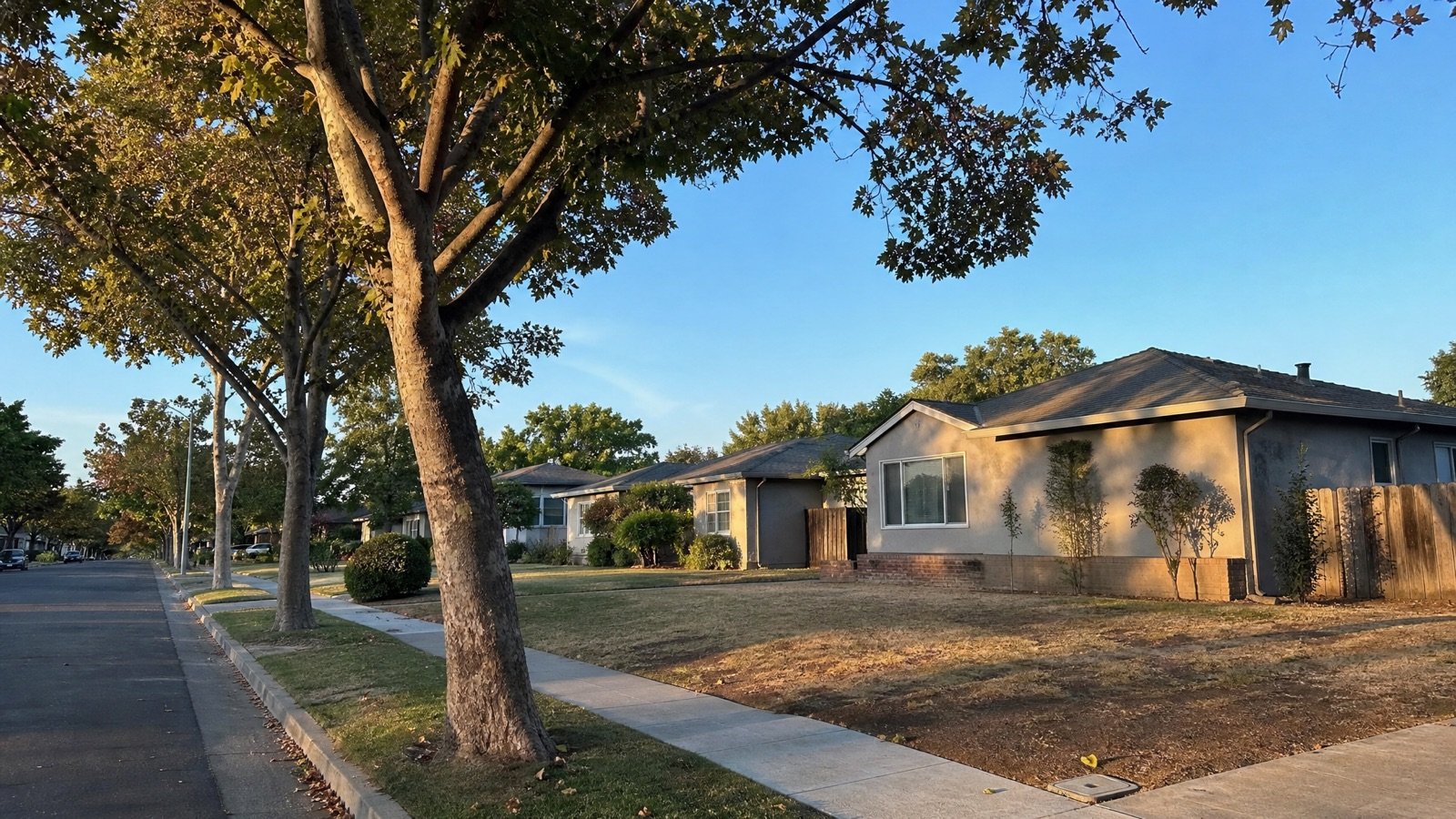
The Sacramento area is a group of very different markets. Elk Grove and Folsom have a lot of newer, larger homes in planned neighborhoods. Citrus Heights, Carmichael, and North Highlands have older postwar ranch houses. Orangevale and Rio Linda have larger lots, with septic and wells in some areas. West Sacramento is in Yolo County and Roseville is in Placer County. Each has its own price level and its own trend.
When you see a headline about Sacramento home prices, ask which geography it covers. It might be the city, Sacramento County, or the whole metro that also includes neighboring counties. The difference can be large.
Where to find a reliable, dated number
- Local realtor association reports. The Sacramento Association of REALTORS publishes regular market statistics for the area, and the California Association of REALTORS publishes statewide and county reports.
- Public sales records. County recorder and assessor offices keep records of what homes sold for.
- Large real estate sites. Zillow, Redfin, and Realtor.com show sold prices and median trends by city and ZIP code. Check the date on whatever you read.
- A local agent. Ask for sold comparables: houses like yours that sold in the last few months near you.
Always look at sold prices, not asking prices. Asking prices show what sellers hope for. Sold prices show what buyers paid.
What the median means for a fast sale
A median tells you where the middle of the market is. It does not tell you where your house sits. Three things move your house away from the middle:
- Condition. A house that needs a roof, air conditioning, and a kitchen sells below the median for its area. The discount is roughly what a buyer expects to spend on the work, plus time and risk.
- Location and size. A small house on a busy street will not follow the same line as a larger one on a quiet cul-de-sac.
- Terms. Homes with a HOA, a special tax bill, a flood zone, or a septic tank can narrow the pool of buyers and lenders.
If your house is in good shape and priced near the median for its area and type, a listing with an agent usually works well. If it needs work, the median is a ceiling, not an estimate.
Should you wait for a better price?
Many owners ask whether they should wait. Before you do, add up what holding costs you each month: mortgage payments, property taxes, insurance, utilities, landscaping, and upkeep. A vacant house in the summer heat has extra risk of damage. If you expect a small change in price, those costs may cancel it out. If you expect a large change, remember that predictions about housing markets are often wrong.
Waiting can be reasonable if the house is in good condition, you are not paying two housing bills, and a local agent believes the market supports your price. It is also reasonable if you can afford the repairs that raise the value.
A practical way to decide
- Look up the latest sold-price median for your city and house type from a dated source.
- Ask a local agent for sold comparables near you.
- Get a repair estimate from a contractor you trust.
- Add up your monthly holding costs.
- Request a written cash offer.
- Compare the net numbers, after repairs, commissions, and holding costs.
If the cash offer is lower but the net is close, a direct sale may be the better choice. If a listing clearly nets more, list the house. To see how that tradeoff looks, read how it works or our guide on what a realtor makes off a $300,000 house.
Frequently asked questions
What is the median price of a home in Sacramento?
It changes every month and depends on the area and the source. Check a dated report from the Sacramento Association of REALTORS, a county record, or a large real estate site, and look at your own city and house type.
Is the median price the same as what my house will sell for?
No. The median is the middle of all sales. Your price depends on size, condition, location, and terms.
Does a house that needs repairs sell below the median?
Usually yes. A buyer subtracts the expected repair costs, plus time and risk, from what a similar house in good shape would bring.
Should I wait for prices to rise before selling?
Only if you can afford the holding costs and the house is in decent shape. Taxes, insurance, utilities, and upkeep keep running while you wait.